Tuesday, December 1, 2009

Rocking the Periphery

LEGO Rock Band Screenshot


I dove back into the rhythm music genre recently with Lego Rock Band. I just haven't gotten around to The Beatles Rock Band but I'm sure I will eventually. It's been several months since I've played Rock Band 2 seriously, probably closer to a year, and I'm rediscovering why these games are so fun. I haven't played a Guitar Hero game since the third outing, so I don't know how they do things these days' but I've really been impressed by one particular aspect of this latest Rock Band: how it conveys information to the player. This might all be obvious to some people, but I still think it's worth pointing out because it's done so well.

Different types of games have different requirements for letting the player know what's going on around them. Shooters typically need to show how much ammo and health a player has. They may also need to show where mission objectives are located and where enemies are located. Rock Band needs to show:
  • The player's or band's current score and how many stars have been earned so far
  • The current score multiplier
  • How much Overdrive energy is stored up for each player
  • How well the player is doing overall
All of this in addition to the note chart itself. Most other games can present information to the player however they want with their HUD as long as it's clear and readable. The player can easily glance at the various indicators on screen and deal with that information accordingly. With the current crop of rhythm music games, though, the player's focus is almost entirely on the note chart. Especially on higher difficulties, taking your eyes off the note chart is a very risky act. So how can Harmonix tell the player things he or she needs to know without causing them to miss notes? They do it through sound and peripheral vision, and do it in such a way that both beginner and advanced players get something out of it.

For most players, the actual score is probably not the most important thing they need to know when playing a song, especially when playing that song for the first time or two. However, the number of stars earned are used to unlock new gigs and venues when playing the World Tour mode, and earn more fans and money for buying things to customize the player's character, so it's helpful to know how close you are to earning all five stars. As each star is earned, a glittering jingle plays. Its volume isn't that high, so sometimes it can be missed while concentrating on playing the song itself. When the fifth star is earned though, the jingle is louder and slightly louder. It's pretty obvious when it plays no matter what the song is. At this point you can relax somewhat and just focus on making sure you and your bandmates don't fail out before the song ends.

To earn those stars, it's important to keep the score multiplier high. The current multiplier is displayed at the bottom of the screen and a small CD icon fills up fills up for each multiplier, but they don't stand out and are easy to overlook. However, getting the maximum multiplier changes the multiplier display to a bright blue that can can be seen out of the corner of the eye while playing. Bass players also get a shimmering blue background behind their note chart, but in either case a player can easily know when they've maxed their multiplier. This of course plays into when Overdrive energy should be deployed.

Everyone I know still calls Overdrive by the Guitar Hero term Star Power. Whatever you call it, Overdrive doubles the current multiplier and is essential for earning high scores and getting gold stars on expert difficulty. Playing glowing white notes successfully fills up the energy meter by a quarter, and when it's halfway full the player can deploy the energy to get the score boost. Since looking away from the note chart to see if the meter is ready can be dangerous, Harmonix adds a large pulsing yellow glow when the meter is halfway full. Again, it can be seen in the peripheral vision without having to look away from the note chart.

An interesting situation emerges for more advanced players. Players can deploy their energy when the meter is halfway full, but experienced players know to let it fill up all the way for longer multiplier boosts. Once the meter starts pulsing, it doesn't change when it fills all the way up. The player who wants to use the full meter needs to either mentally keep track of how much energy is stored after the halfway point or take the risk of glancing at the meter instead of the note chart. For these players, the higher scores are usually worth the risk if it can be pulled off.

Finally, Harmonix uses several methods to provide an overall indicator of how well a player or band is doing. The crowd will begin singing along with the band once a high enough note streak has been hit, and of course everyone is familiar with the jangling of missed notes, boos from the crowd, and blinking red note board when failing out is imminent. A crowd meter is also shown on the left side of the screen. At first I wasn't sure how much this adds to the player's knowlege of what's going on, but I think it ends up being useful for when multiple people of varying skill levels are playing together. A more advanced player can quickly look at this to see how well everyone is doing and decide whether they should use their Overdrive energy for a score boost or hold it in case someone fails out.

All of these add up to a highly effective way of communicating some of the most important information to the player while minimizing the risk of breaking the player's concentration. While things like attempting to activate Overdrive or overly frenetic animations in the background can cause a player to lose the beat, it's pretty easy for a player to know how well they're doing at any particular time, and I'm sure Harmonix iterated a lot on those methods of communication while developing the game. It's also fairly easy to track the improvements in this aspect through the course Guitar Hero 2, Rock Band, Rock Band 2, and Lego Rock Band. So good job, Harmonix. It's not something that most people notice, but I know it takes a lot of thought and work to get something like that right.

Monday, September 21, 2009

The Dark Is Where I Shine

riddick[1]
The Chronicles of Riddick: Assault on Dark Athena is a remake and expansion of 2004's well regarded The Chronicles of Riddick: Escape From Butcher Bay. If you've seen the movies Pitch Black or The Chronicles of Riddick you know that Vin Diesel's Richard. B Riddick is the galaxy's ultimate badass. He can see in the dark, he can take on anyone in hand to hand combat, and if he doesn't want to do that he'll simply sneak up on his enemies and break their necks. He has no remorse, no fear, and no one who can match his skills.

He is, however, as vulnerable to bullets as you or I.

Riddick excels when it tasks you with skulking around in the dark, taking out frightened enemies along the way before they know you're there. More than any other game I've played, I really felt like I was inhabiting the character and doing things just like he would in "real life." The lighting in the game is fantastic. Shadows are black as jet, lights flare when coming to a bright space, and entire spaces can be momentarily lit up by gun flashes. You always know when you're effectively hidden by the dark, even without the game artificially tinting the graphics blue to let you know that you're hidden. When sneaking up on an enemy from behind, once you're close enough to take them down Riddick's hand's raise in preparation for the kill. Initiating the kill causes Riddick to leap up and snap their neck. There are maybe one or two seconds of struggle from the victim, but it always ends with a sickening crunch and a limp body that you are able to drag into the darkness or leave as you see fit. Like any good stealth game, the tension of sneaking around and quietly dispatching foes is excellently done.

the-chronicles-of-riddick-assault-on-dark-athena-20090211000055177_640w[1]
The game also features a fairly good melee combat system. Brass knuckles, shivs, scalpels, screwdrivers, and in Dark Athena, wicked looking blades called Ulaks all increase the damage you can do whilst fighting hand to hand. Different moves can be performed depending on the direction you're moving, and different animations play out depending on the weapon you're using. The impact of flesh on flesh are satisfying, and the sounds of sharp objects penetrating skin are cringe-inducing. Once you finally do enough damage to your opponent, a vicious animation plays out where Riddick painfully and permanently ends that person's life. It may be repeatedly smashing his knee into a person's face. Or it may be to shove a screwdriver through an exposed throat. Or he may just slice an opponent's neck open with the scalpel. The finishing moves are visceral and brutal.

In many parts of the game, Riddick is unable to carry firearms. When faced with an armed opponent, the best course of action is to sneak around and try to take them out from behind. The game doesn't always allow you to exercise this option though, in which case you must try to take down the enemy head on. Riddick dies quickly under sustained gun fire, so instead you must run at them headlong and start punching. The enemy will begin to melee you in an attempt to push you back, therefore giving him enough distance to start shooting. When he swings at you with his weapon, a well timed button press will cause Riddick to grab the gun in mid-swing, force it under the enemy's chin, and pull the trigger.Eventually, Riddick gains access to a tranquilizer gun which paralyzes them on the ground for several seconds. If you can get to them in time you can trigger a quick kill where Riddick will crush their skull under his heel.

It's safe to say that the non-interactive animations make up a big part of what makes the game satisfying. They are the rewards for all the skulking around, and effectively release the tension of stealth and melee combat.
161148__riddick_l[1]

The game fails pretty hard, though, when it decides to stick with gunplay exclusively. Enemies are frequently hard to see. While it's possible to shoot out the lights with the tranquilizer gun, many enemies are equipped with flashlights that can expose you from quite a long distance away. Stealth in these cases is not an option. A headshot is just as effective in this game as any other shooter, but it's nearly impossible to get a headshot on a moving target in this game. Enemies seem able to soak up a clip and a half of rounds to the chest area before going down, while Riddick can only take a few shots. I noticed in The Darkness, Starbreeze's other game, that the shooting mechanics seemed off as well, but the supernatural powers available to you in that game made up for it. For whatever reason, it seems difficult to put the aiming reticule precisely where you want it. Instead of feeling like a stealthy demon preying on victims in the dark, you feel like a big, slow, clumsy buffoon spraying bullets indiscriminately at enemies. Perhaps if I had played on PC this wouldn't have been an issue.Admittedly, I am also not the world's best shooter player. Nevertheless, shooting accurately in this game felt like a real struggle.

The Escape From Butcher Bay campaign constantly switches between stealth and gunplay, with a few mech sections thrown in to spice things up. I essentially found myself alternating between really enjoying and really hating the game, depending on what segment I was in. The first half of the Assault on Dark Athena campaign is almost exclusively stealth focused, or tuned in such a way that you can get the drop on several gun wielding enemies. There are a few exceptions, and the AI has a frustrating habit of cheating at times, but overall, the first half of Dark Athena is a stellar exercise in first person stealth culminating in a tense and exciting hand to hand boss fight. The second half is nothing but shoot shoot shoot, much of it in broad daylight, and ends with a gun battle against a fast moving mech thing that's more annoying than anything else. If you want the purest experience of what it's like to be Riddick, play the first half of Dark Athena. The second half, along with Butcher Bay, can safely be skipped.

Wednesday, September 9, 2009

A Tale of Two Adventures

To start things off, I want to compare two older games I recently played: The Longest Journey and LOOM.

Both of these games are from the previously defunct but now resurrected point and click adventure genre. A player typically enters an environment, explores it to find objects and/or non-playable characters to interact with, and encounters some sort of puzzle that must be solved in order to progress to the next area or plot point to repeat the process.They also tend to focus heavily on dialogue, character, and plot.

Released in 1999, The Longest Journey was one of the last great adventure games released (with 2002's Syberia, perhaps, being the very last) before the genre's current revival. It centers around 18 year old April Ryan and her reluctant quest to save both her world, the science oriented Stark, and the magic filled Arcadia, from being destroyed by the forces of Chaos. Stark, as far as I can tell, is our world, just several hundred years in the future.

As the player solves puzzles and the plot progresses, April fulfills a few prophecies, reunites estranged races, and ends up cavorting with god-like dragons as she fights to restore balance to the two worlds. Before all that, and after a brief dream-like prologue, the game introduces us to April and her daily life. We meet her landlord, Fiona, and her partner Mickey. We also encounter her two closest friends. Emma is the hot friend who always ends up with the wrong guy. Charlie is the open minded but tragically friend-zoned companion she works with. There's the sleazy neighbor who just wants to get in April's pants and penny pinching boss who nevertheless cares for his employees. They're all painted with broad strokes, but they effectively convey April's little community and provide a human anchor for the epic events that follow.

As the game continued, I found myself hooked on finding out what the next fantastic environment would be. There's a huge variety of locales featured in the game, all beautifully rendered and in pseudo-3D. Despite that, though, whenever I was back in Stark I made it a point to try to find my friends in the game and see how they were doing and what they were up to. They tended to be my main motivation for continuing in the game.

This brings up my main point. In adventure games, I rarely enjoy the puzzle solving. What some see as the meat of the gameplay, I usually see as an irritating obstacle keeping me from finding out what happens next. I enjoy the stories and characters in adventure games more than anything else. While there is of course a certain satisfaction that comes from solving many of the puzzles, I very quickly lose patience when I get stuck on a particularly obtuse problem. Sometimes the leap in logic required is not at all what I'd consider logical. Other times, the environments conspire to make me miss a crucial item or object with which to interact. When I think back on an adventure game I played in the past, I remember two things: the writing and characters, and the puzzles I got stuck on. I may remember a puzzle's solution on a repeat playthrough, but I generally don't think about them afterward. When I'm gushing to someone about The Longest Journey, it's usually about the character of April Ryan or a particularly memorable event in the plot. Similarly, the things I remember about The Secret of Monkey Island are the great gags and jokes, and how I always seem to get stuck on the boat after getting off Melee Island.

Contrast this with LOOM, which features a more traditional fantasy world where you, as Bobbin Threadbare, learn to "weave" spells by playing musical notes with a distaff. Each spell consists of four notes, and some can be reversed to produce the opposite effect. For example, the Open spell also closes things when played in reverse.

Like all PC adventure games you click on the environment with the mouse to move around and select objects. To cast spells, though, you press the keyboard key corresponding to the note you wish to play. To turn straw into gold, press C, C, C, and E. This added an interesting tactile feel to all the puzzles. Clicking the mouse is something that long time computer users don't notice or acknowledge unless something goes wrong. Games like Diablo and Starcraft have taken clicking the mouse to almost absurd extremes, but it still requires little effort or thought to move the mouse button down a few millimeters. 

This more methodical, tactile approach reminded me of the first time I played the Wii or DS. The novelty of doing the same old thing in new ways makes quite an impression, even though that novelty wears off quickly. It seems like a silly thing to say; playing games on the computer of course requires the use of the keyboard. The WASD keys in shooters are such a standard that my fingers instinctively go to that position when I sit at my keyboard, and they're effectively invisible when I play those games. With LOOM, though, the gameplay is completely different, and perhaps because I have no musical skills in my body, entering each spell was a somewhat methodical act. The Open spell is used often so I memorized it quickly, but others required me to hunt them down in the manual where I wrote them down. Then it was a matter of pecking at each key to fire off the spell. Instead of just clicking through the puzzles, I actually felt like I was interacting with them. While I still got stuck a few times, I tended to look forward to the next time I could cast a spell and have it work.

I found out later that you can click on the notes displayed on the screen instead of pressing the keys, but I stuck with the latter. I suspect a more musically inclined person would have gone through the game quicker than I did. Indeed, there is a higher difficulty level where the notes are not displayed on screen and only by listening and knowing what each note is can you cast it. Something like that is only possible with this particular game, but it's a wonderfully unique way of adding challenge.

The makers of video game consoles have spent decades figuring out how to make good controllers, game developers have wrestled with creating the best control schemes for those controllers, and it's often said that the best games make you forget that you're holding a controller at all. The old keyboard and mouse, though, doesn't seem to get much attention. Barring flight sims and maybe racing games, it's just what you use on the PC. LOOM made me "see" the keyboard again, and it made the experience more enjoyable as a whole.

Tuesday, September 8, 2009

A New Focus

For several months now, I really haven't had much to say here. While I've been playing plenty of games, I've had nothing in particular to contribute to the conversation around them, if one even exists. I don't have the liberal arts education or, it seems, frame of mind, to do in depth critiques like my favorite bloggers L.B. Jeffries, Michael Abbott, Leigh Alexander, Iroquois Pliskin, Corvus Elrod, and a host of others have learned to do so well.

So! What now? Well, I enjoyed writing my posts on difficulty in games. Why? Because I was able to figure out just why I enjoy Burnout Paradise so much. It was an interesting thought exercise for me, and it was satisfying to figure out something that is usually just a vague feeling in my mind when playing a game.

Most, though not all, of the gaming blogs I read have some sort of overarching theme or focus to their posts. Many authors have found a nice niche for themselves in examining games from a particular focus or viewpoint, and for a while I've felt like I needed the same thing in order to keep myself motivated to post and to connect posts together a little more coherently. Therefore, I will try to do the same thing I did with Burnout Paradise on a regular basis. Why is the game I just played fun? Why is it not? What is it that added to the experience, and what is it that detracted from it? I may not say anything new about a particular game, but I look forward to it as a good thought exercise for myself, if nothing else. So off we go! I hope some of you find this interesting, and maybe some people will comment with their thoughts on what they do or don't find fun about whatever game I'm rambling about.

Tuesday, April 14, 2009

Post-Apocalyptia Done Bright


The Legend of Zelda: The Wind Waker opens the words "This is but one of the legends of which the people speak..." and presents a montage retelling the events of Ocarina of Time. A great evil steals the golden power of the land, and a Hero travels through time to defeat him and restore peace to the land. I'm sure it brought a smile to the face of those players who played Ocarina. But then the story continues. Some time after the Hero of Time completed his quest, the great evil returned and apparently destroyed the land. The Hero never returned, and the ultimate fate of that kingdom was forgotten.

The story is presented in a primitive art style that emphasizes that the story has been passed from generation to generation. A specific time frame isn't given, but I get the feeling that several centuries, or perhaps even a millenia or two, have passed since the events told in the legend. At the beginning of the game, on the aptly named Outset Island, boys who have come of age dress in green clothing on their birthday to celebrate the legendary Hero and to hopefully inspire them to act with the same maturity and bravery that the Hero himself showed.

While the legend speaks of a land of mountains and green hills, the world as it stands now is nothing but several islands scattered across a vast sea. There doesn't seem to be any government or group to unify the people. The people of each island take care of their own affairs and only sporadically trade with the other islands. A race of birdmen take to the skies to deliver mail to the islands, and are probably a more reliable means of communication than shipping letters on boats. Strangely, even though the world is dominated by the sea, few people seem to have the knowledge or skills to take to the ocean themselves. On the commercial hub of the world, Windfall Island, sailors and civilians tend to avoid each other, and more unsavory types gather in the pub at night. Perhaps the lack of a more pervasive seafaring culture is explained by the dangerous creatures, cyclones, and whirlpools that can spell doom for the careless sailer. It also seems that pirates roam the seas, including a band led by a girl who may be around the same age as the pirates gunned down by US Navy SEAL snipers the other day.

The world seems to have experienced its great cataclysm, and moved on. So much time has passed that the broken, isolated groups of people now see their lives as normal. In Fallout 3 only two centuries have passed since nuclear Armageddon and evidence of the old way of life still litters the landscape. Anyone can look around and see what kind of life they could have had if only things had turned out differently. In The Wind Waker, the world is perhaps just as dangerous as the Capital Wasteland, but the tragedy of what's befallen the people isn't nearly as evident. It's presented in the isolation of the people, in the glimpses of strange lands that dot the ocean, and in the remnants of powerful magic that anyone who played Ocarina of Time will recognize. How sad is it to see the great Deku tree tormented by mere Chu Chu's? The world is a pale but beautiful shadow of its former self, and the great evil seems to have won, though where he went off to remains a mystery. It's a world that the player wants to save so that the former glory might be restored.

Monday, March 2, 2009

A Liberty City Story


The Grand Theft Auto games, as we all know, are routinely criticized for their brutal violence. Whether it's the brutal lifestyle of crime that the stories dwell on, or Youtube videos of mindless rampages through the city, the series is steeped in violence. It's part of the appeal, and I'm not here to attempt to condemn or condone it. I have fun playing the game and I'm perfectly aware that what's happening is not in the least bit real.

On the other hand, the simulation of the city, traffic, and people within it often comes together to make for some uncanny moments. I've played nearly 100 hours of GTA IV, and one moment stands out in my mind as the only time I actually felt disturbed and a little sick by my actions in the game.

The Xbox 360 version of the game has an achievement called Chain Reaction. To unlock it you must cause ten vehicles to explode in ten seconds. I started my attempt by hijacking a parked bus in Star Junction and driving it to the nearby bridge leading to Broker. I then turned it so that I was completely blocking traffic on the bridge. After a couple minutes I had a nice little traffic jam of a dozen cars or so in front of me.

It takes a lot to rile the citizens of Liberty City. You can walk around in public with a weapon drawn, and while a few people may make a surprised exclamation, they don't really seem frightened by a man walking around with a sniper rifle or rocket launcher drawn. It's only when you begin aiming it at people that they begin to freak out. Perhaps the constant threat of death at the hands of terrorists or, more likely, the inept Liberty City Police Department have hardened them to the supposed dangers of an armed common citizen.

With my herd of vehicles waiting to be exploded, I climbed on top of the bus and surveyed the road in front of me. Several drivers honked angrily and hurled profanities my way. Others tried to creep forward, causing a few fender benders and even more cursing and gnashing of teeth. I switched to my grenades. There were no reactions. Then I pulled the left trigger to aim where I wanted to throw.

The drivers went nuts.

People began screaming. Instead of angry exclamations of profanity, now they were terrified. Some tried to back up, but were unable to because of the cars behind them that impatiently ran into their bumpers before. They were trapped. They had nowhere to go, and all they could do was look at me in horror as I prepared to end their previously mundane in-game existence. The few smart ones got out of their cars and ran away as fast as they could. In all of this, they had gone from amusing avatars made to resemble people to realistic people reacting to a sudden, unexpected, and horrifying situation. I suddenly found it difficult to say to myself, "It's just a game." While I certainly wasn't confusing it with reality, the elements of the simulation managed to convey how real people would likely act in that scenario. I thought, "Wow, this is kind of sick."

After a couple seconds hesitation, I lobbed all of my grenades into the drivers' midst. A large series of explosions engulfed the bridge and traffic, including the bus upon which I stood. My body was thrown around the pillars and supports of the bridge, and I laughed at the hilarious rag doll effects. The achievement didn't unlock, but the moment I actually felt discomfort and remorse for my in-game actions is not one I'll soon forget. I think the game unlocked an achievement for itself in that moment.

Thursday, January 22, 2009

February 2009 - The Month of DLC


February is looking to be an odd month when you look at some of the new videogame related stuff coming out. FEAR 2: Project Origin and Street Fighter IV are coming out, but it seems like the biggest new releases are for games we've already played.

Fallout 3, Burnout Paradise, Mirror's Edge, Tomb Raider Underworld and Grand Theft Auto IV are all getting new expansions to the original content they came with in some form or another. Developers now seem fully committed to extending the life of a game through new downloadable content, and now that the holiday crush is over, they want us to return to the games we rushed through earlier, or finally pick up the ones that we regretfully decided didn't make the cut for a purchase. I would love to see the sales figures for downloadable content from the last few years, but that information seems to be a closely guarded secret for reasons I don't understand.

In a way, Bethesda helped pioneer this brave new DLC frontier we're currently exploring. They still haven't lived down the overpriced horse armor they released for Oblivion, but the subsequent expansions they released were much more feature rich and sensibly priced. It sounds like the new stuff they have planned for Fallout 3 will take a lot of what they learned from their experiences on that earlier game. They all look like they're going to offer a substantial amount of content for the amount of money being asked for. The DLC for March will also fix one of the main complaints about the game: not being able to continue past the main quest.

Burnout Paradise of course has been receiving free content for the past year, but February's DLC will mark the first time an update is being charged for. There will also be a free patch to go alongside it, but the paid portion will test just how much goodwill has been built up over the past year from the free stuff. My worry is that this first premium pack seems to add features that nobody was really asking for, while not adding what people DO want. It adds a local multiplayer "party" feature where players pass around a controller and compete in challenges like the online multiplayer has. What people have actually asked for is a split-screen racing mode, but that has not been added in. The free patch will be adding a restart option for events, which will at least address the other large complaint many people have about the game. I still contend that pining for such an option misses the point of the game, but I'll live.

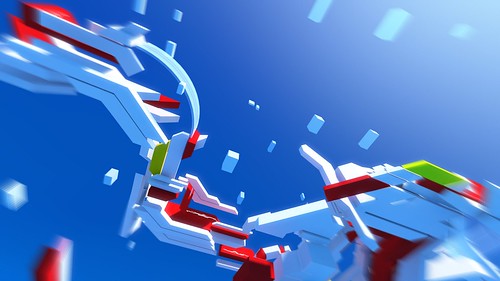
Mirror's Edge is getting a new pack of time trial levels for players to master. The interesting thing about them is that they're presented in a very different and abstract style compared to the levels in the main game and original time trials. As shown in the picture above, the new levels look to be purely a playground for the fast, fluid freerunning the the story mode only occasionally got right.

The DLC for Tomb Raider and GTA4 seem to be the most traditional. Tomb Raider simply adds a few new levels to explore that were cut from the main game. GTA4's episodic expansion, The Lost and Damned, will cost $20 and feels like the disc-based expansion packs that used to be sold for PC games a few years ago. It adds a new story and characters, but other than that we don't know much about it.

The first three examples are the most interesting to me because they all represent efforts by the developers to respond to player feedback. Mirror's Edge may be a happy coincidence, since the DLC for it was announced soon after the game was released, but otherwise we're finally seeing significant changes come to game instead of having to wait for a sequel to fix our collective gripes. It will be very interesting to see if The Lost and Damned has responded to the narrative and character complaints that people had about the original game. I think it would also be hilarious to hear the term "ludonarrative dissonance" mocked on one of the new radio or TV stations that will be added.

Responding to player feedback through patching has been pretty common on the PC for years, but it's new for consoles, and monetizing it is new to both sides. Bethesda once again seems to have paved the way for paid downloadable content on the PC with Oblivion and Fallout 3. Valve has released a slew of free updates for Team Fortress 2, but will be forced to charge for them on the Xbox 360. Infinity Ward released several free map packs for Call of Duty 4 yet charged for them on both the Xbox and Playstation 3. I'm frankly surprised that there wasn't more of an uproar from PC gamers when the Oblivion content was released. Except for the horse armor, perhaps people felt that the content being offered was done so at a fair price. When you add in the fact that DLC may directly address the larger issues that players may have had with a game, it becomes worth the price even more.

Sunday, January 18, 2009

Playing Catch Up - Final Fantasy VII

I've stated before that I have a bit of an insecurity about the games I never got around to playing. Like I stated in that post, I had a Sega Genesis and played the Sonic games obsessively, then stuck to playing Star Wars games on the PC until I bought an Xbox 360 in 2005.

The latest effort to shorten my list of gaming classics never played has been a playthrough of Final Fantasy VII. I managed to snag a copy relatively cheap compared to the astronomical prices found on Ebay and am currently working my way through the first disc.

It's hard to know how you're "supposed" to react to these older games. I've been hearing people rave about FF7 for years now. Everyone wants a remake on the PS3. Everyone's heard about how the game made players cry. So how is someone like me supposed to react? I suppose it's like reading a classic novel, or watching a classic movie. Even if it may not be the greatest thing ever anymore, you can still appreciate what it did at the time. Having said that, here are some quick initial thoughts on the game:
  • I miss the sphere grid. FFX's leveling system was much more interesting and fun to me than FF7's old fashioned passive advancement system. The Materia system is an interesting attempt to go beyond just earning levels, but so far the Materia I have grow so slowly that I don't think about it much. It's obviously harder to go from a more refined version of a game to an older one.
  • Similar to that last note, the graphics are rough. I don't mean that as a knock against the game, but it's amusing to go from the extreme amount of detail in Fallout 3 and then look at the "state of the art" graphics from the PS1 days. It's amazing how far we've come, and how far we still have to go in terms of realistic graphics. It also makes me wonder about the number of "all time great" games like Ocarina of Time, Super Mario 64, Metal Gear Solid, and Final Fantasy VII. These are undeniably excellent games, but I wonder if seeing these already long running franchises in three glorious dimensions had a larger part in imprinting these games in people's memories than they give it credit for.
  • The tone of the story and characters seems a bit schizophrenic. It's like the game can't decide if it wants to be a goofy lighthearted adventure, or a more serious and dark adventure about a tormented superhuman and the people he's hurt in the past. Barrett annoys me every time he opens his goofy text-based mouth. I think this, along with a somewhat boring leveling system, has contributed the most to my somewhat "meh" feelings toward the game.
  • Why does the game wait several hours to tell you what the various statuses in combat mean? Why is that explanation in an optional area of the game that some players could easily miss? Not even the strategy guide I acquired explains everything. Not everyone has been playing these types of games since birth.
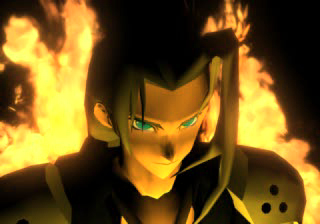
  • The moment Sephiroth discovered who he was and destroyed Nibelheim WAS cool. Dark and dramatic, with the perfect soundtrack to go along with it. I can see why that character in particular has stayed in gamers' collective memory this long.
I'm not really sure how far I am in the game. I've been doing a lot of preemptive grinding in order to try and avoid the frustrations I had in FFX where I moved through the game at what I thought was the pace determined by the developers, only to be stopped short by an annoyingly hard boss. I guess grinding on my own terms is more acceptable than being forced to by the game.

In all, my feelings so far are that it's an enjoyable game, but I'm not finding myself blown away! (ign.com) drawn into it like I was with FFX. I do plan to keep playing it though. Hopefully it won't end up feeling like an obligation. My OCD already hates me for not having finished FFX yet.

Thursday, January 8, 2009

Difficulty Done Right - Part 2

I meant to have this up sooner, but I wanted to play more Prince of Persia first and ended up playing, well, all of it.

A lot of reviews I read for Prince of Persia made it sound as if the game practically played itself. I suppose to the jaded reviewer tasked with reviewing five games a week, the game is easy to blow through quickly. For myself, I still found plenty of occasion to get annoyed at myself when I messed up a tricky platforming segment, or missed a quick time event during a boss battle.

Many of the game's achievements on the Xbox 360 (and, I assume, the trophies on the PS3) are comically easy to get, but some of them do require a bit more skill, or, at least, patience to acquire. Beating the game under 12 hours is easy if you only get enough light seeds to beat the game and don't bother with the side conversations between the Prince and Elika. Using all of the combos in the game is easy if you use the list provided in the menus, but the certain situations make it so a combo doesn't "count." Probably the trickiest achievement is having Elika rescue you fewer than 100 times during the course of the game.

Even so, the game is easy compared to most triple-A games being released, and I'm not sure that adding difficulty through achievements or trophies really counts as adding difficulty. The platforming doesn't require the precision and timing of Super Mario Galaxy or LittleBigPlanet. Bosses can regenerate health during fights, but only a few times. I confess that I found the boss fights frustratingly drawn out until I realized how to string combos together to take out large chunks of an enemy's health. I think the hardest part of the game is tracking down all the light seeds that end up scattered around each area after a boss fight.

Overall, the game is welcoming to newcomers, and the platforming looks and feels good enough that someone who prefers a harder game may forgive the low barrier to entry. The combat at least benefits from learning the combos, but if nothing else the enemies can be killed through slow attrition. Ubisoft made it much easier for people to play, but they perhaps didn't do enough to make it appealing to the more hardcore gamer.

So we've discussed Call of Duty on Veteran and how only the most skilled and dedicated are able to complete it. Burnout Paradise rewards exploration and knowledge of the city more than straight reflexes, but those reflexes are still necessary to progress. Prince of Persia is a pretty easy game compared to most, perhaps too easy for many. Is there any game that casts a net wide enough to catch those looking for a more casual experience along with something to appeal to the masochists out there?

I believe one has at least come close.

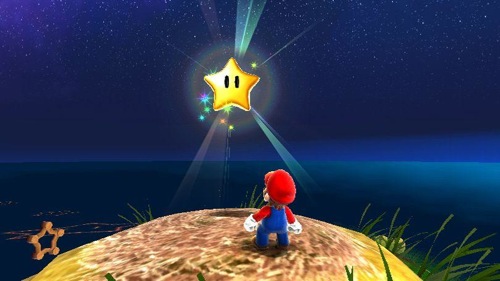
As I've played Super Mario Galaxy, I've been struck by how the game is structured to include multiple difficulty levels around collecting all 120 of its power stars. Each of the game's six observatories has several galaxies. As you collect stars, you unlock new galaxies. Later galaxies in the observatory are generally more difficult than the earlier ones. Many galaxies contain hidden stars, and finding them takes more observation than simply completing the level. Even when you know where a hidden star is, the route there may be far more treacherous than the rest of the level.

In addition, many levels will have a star that you can only acquire when a comet shows up. The comets take a previously played level and change it somehow. Sometimes you have to race the clock. Sometimes enemies are sped up. Sometimes you have to fight a boss with only one slice of health. Sometimes you have to race a doppelganger of Mario to the star. All of them require at least a passing familiarity with how a level is structured.

As you collect Star Bits, the in-game currency, you can unlock other galaxies that are outside of the normal observatories. These levels are also generally more difficult than normal. Finally, there are three hidden green stars that unlock the trial galaxies. When I decided to do the final boss fight, I had between 80 and 90 stars total, and the three trial galaxy stars were the most difficult to acquire. They required all of the skills gained throughout the game, and two of them had no checkpoints at all. If I died at the end of the level, I had to do the whole thing again.

The great thing about these varying difficulty levels is that it's completely up to the player whether or not to attempt them. Only 60 stars are required to defeat Bowser, but the game encourages you to get more by hinting at the rewards that will be unlocked. Earning stars unlocks chapters in the storybook, which explains the origins of the enigmatic Princess Rosalina. Even opening up new galaxies is a reward in itself. I was constantly wondering if the game could top the previous levels I had played, and it almost always did. A red star sits atop the library in the hub world, teasing you with, "I have a secret! But I'm not telling you." Get enough stars, and you'll eventually learn what that secret is. Getting all 120 allows you to play the game as Luigi. There always seems to be another reward to shoot for.The game accommodates multiple skill levels from the outset while encouraging players to push themselves further to see what they will be presented with next. Burnout Paradise, as much as I like it, really only presents completion itself as a reward for progression. There are dozens of cars to unlock, but only a few balanced enough to use regularly.

Obviously, a certain amount of skill is required for even the easiest levels. My mom has a DS and New Super Mario Brothers. She enjoyed it, but wasn't able to get very far in the game. When visiting I could often hear her yelling "Come on Mario!" when she missed a jump. When I showed her Super Mario Galaxy, she loved how it looked, but didn't even want to give the game a try. I think she assumed that she'd have no chance at doing well in the game's 3D environment, especially in levels where gravity and the camera are constantly shifting around. I can't blame her for thinking that way.

Saturday, January 3, 2009

Prince of Persia - Why?


Major Prince of Persia spoilers ahead.

I can accept that the Prince fell in love with Elika. Okay, as their relationship developed over the course of the game, it felt like it went from mutual loathing to friendly respect, rather than loathing to love. However, the Prince has always been a loner, living for himself and staying on the lookout for the next fortune, the next girl. He may not have known he had those feelings until Elika dropped dead at the base of the tree imprisoning Ahriman. Or, perhaps he simply kept those feeling hidden from Elika, and by extention, the player. I can believe it in the same way I believe two people can fall madly in love over the course of a 90 minute movie.

What I'm not sure I can accept is that the Prince is so grief-stricken, so selfish, and so stupid at the prospect of Elika's death that he would then unleash Ahriman again into the world, completely invalidating the previous 12-14 hours I put into the game. He's selfish, but the game convinced me that he's not a fool. He understands the devestation that Ahriman will wreak upon the world. He knows how the corruption can distort even the most honorable of kings. He also understands that to Elika, imprisoning Ahriman and helping her people return to their lands is the most important thing to her.

So to suddenly have the Prince be so devestated by Elika's death that he decides to free Ahriman again in order to resurrect her feels like a betrayal of the character, and a betrayal of the player's understanding of the Prince and the time spent playing. Was it supposed to be justified by his established selfishness? Was Ahriman strong enough to cloud the Prince's feelings so much that he would completely undo everything he just did? It feels like Ubisoft Montreal couldn't figure out how to have a cliffhanger ending while also having an epic final battle. As I neared the end, I thought to myself, "I wonder what the story for the sequel will be." Apparently, it will be the same as this game. The final line in the game is Elika asking the Prince, "Why?" That's what I'd like to know.

Sunday, December 28, 2008

Difficulty Done Right - Part 1

I don't enjoy overly difficult games. Challenging games are fine, but it's a rare game that strikes the perfect balance between just tough enough and soul crushingly difficult. I don't usually play games on "Hard" or whatever the game calls it. I'm usually more interested in the narrative and experience of playing than I am in conquering whatever sadistic difficulty level the developers put in. I want to have fun! It's a highly subjective thing, of course, but I doubt I will ever play Ninja Gaiden 2 or Ikaruga for this reason.

While I generally play on the default difficulty in games, there have been a few exceptions. Before Halo 3 came out, I read that the Heroic difficulty was the way the game was "meant to be played." This piqued my curiosity for some reason, and I decided to start the game at that difficulty setting. I found it painfully frustrating, but I was able to push through. After completing the story, I went back on Normal difficulty to get a few skulls I missed, and was struck at how much easier the game was. The difficulty curve from Normal to Heroic is steep, and I think I would have enjoyed the game more the first time if I had played on Normal. Heroic was hard enough that when I pushed through a level or particularly difficult fight, I simply felt drained, rather than accomplished. I did eventually complete the game on Legendary, but that was with a group of four people in co-op, making the game ridiculously easy.

The Xbox 360's Achievements are what really inspired me to start playing games on harder difficulties in the first place. I picked up my 360 a month after it launched, and one of the games I got with it was Call of Duty 2. I played and finished it pretty quickly on the default difficulty, but my friend at work started on Veteran difficulty and got every achievement in the game. I felt I had to match his accomplishment, so I began a new game.

For those of you who haven't experienced it, Veteran difficulty in the Call of Duty games is one of the most punishing and soul-crushing experiences in modern gaming you can have. You only take one or two shots before dying (just like real life!), enemies instantly spot you and are 99% accurate, and their endlessly spawning waves mean you can't simply camp in one spot and clear out everyone in an area. You end up learning exactly where the spawn points and script triggers are because you hve to play each segment over and over and over. I've had Call of Duty 2 since December 2005, and I still haven't finished it on Veteran. My Achievement list for the game is a timeline chronicling the periods of my life where I felt the urge to wallow in misery. Some of the dates in the list are separated by more than a year.

Because of experiences like that, I usually sample a game's hardest difficulty level, but rarely complete it. Other games don't have a difficulty setting, but rather ramp up in difficulty as the game progresses. Burnout Paradise is one example of this.

Burnout Paradise presents you with an open city for you to explore, with various events at every stoplight. Completing these events unlocks new and better cars for you to use. There are traditional races, Burning Route events where you have to get from point A to point B in a certain amount of time, Stunt Runs, Marked Man events where you must get to the finish line while being pursued by opponents trying to take you down, and Road Rage events where you try to take out as many of your competitors as possible in the time allowed without taking too much damage yourself. In addition to that, each road in the game has a Road Rule time to beat getting from one end to the other, and a Showtime mode where you must flip your car down the road causing as much damage as possible.

In short, there is a ton of things to do in the game. If a particular event is giving you a headache, try destroying everything in your path in Showtime. If you lose a race, try linking together three barrel rolls, a 720 degree flat spin, and three seconds of air time in a Stunt Run. There is a certain way to enjoy the game, and whining about having to drive back to the start of each event is not it. The game reduces frustration by giving you an abundance of things to do. Of course, as you near the end of the game, you find less and less to do, but by that point you're generally good enough that the final few events aren't too much trouble. Also, all events can be accessed at any time, even if they no longer contribute towards your progression. Road Rage is a great way to decompress after work.

While each event type requires mastering a particular set of skills, the most important thing is to learn the layout of the city. Compared to the previous game in the series, Burnout Revenge, the AI is more forgiving. Most racing games quickly become utterly intolerant of mistakes as you progress. In Paradise, you can crash once, twice, sometimes even three times in a race and still end up winning. The reason is that having a completely open city allows you to find your own route. The game will give you a path to follow, and it's the path that your opponents will take, but it's rarely the fastest or the best path to take. The biggest reward in the game is learning where the shortcuts, hidden jumps, and best paths are throughout the city. Since all events end at one of eight locations, you learn fairly quickly the main thruways of the game. The other necessary skills like learning how to handle each car and how to pull off the various tricks don't matter if you don't know the best path in which to use those skills.

Since learning the city is the key to winning the events, doing well in the game is much more on the player's shoulders than other games. It still relies on quick reflexes, and the regular traffic in the streets adds a bit of luck to everything you do. On the whole, though, balancing the use of boost and knowing when a turn and/or shortcut is coming up is the most important skill to have.

I think this is part of why I enjoyed Burnout Paradise so much. Unlike Revenge's brutal difficulty late in the game or Call of Duty's Veteran mode, I actually felt like I had a chance at doing well at the higher difficulty levels. The game challenged me and encouraged me to do well, instead of kicking me in the face repeatedly when I did poorly. If I can just make that turn and nail that jump this time, I know I'll come out ahead this time. Like I said before, the sheer amount of things to do means it's hard to be frustrated for long. It may be the only game that I've gotten 100% completion in, and it's in large part because the game made me feel like I could actually do so.

While writing this, Michael Abbott put a post up about Prince of Persia that dovetails nicely with this subject. In my next post, I'll give some thoughts about that game, and also talk about the game that I think has perfectly nailed the idea of multiple difficulties in games.

Thursday, December 18, 2008

Sony Impressions


I picked up a PS3 a few weeks ago. The number of exclusive games for the system currently and soon-to-be available finally pushed me to pool my resources and complete my current generation console collection. Last weekend I also scored a Playstation Portable from the random gift draw at my company holiday party. That, plus the consoles and my Nintendo DS, means that I have fully joined the current gen videogame club.

(I'm going to ignore the iPhone for now until a truly amazing game comes out for it.)

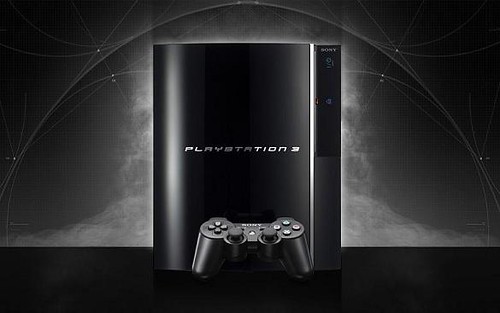
I'll say it right now: the PS3 is an intimidating console. Physically, it's an almost ridiculously large piece of metal and plastic. It seems to almost dominate my entire entertainment setup. It's dark, shiny monolith makes the Wii look utterly pathetic in comparison.

Even the interface conspires to make me feel like I've entered a club that nobody invited me to. The XMB is as black as the hardware that houses it. The number of options underneath each category, especially under the settings section, is dizzying. While I'm sure I'll get used to it, moving around seems to generally take a few too many button presses.

I downloaded Home and briefly played around with it. Going from the dark XMB to the bright white initial Home screen was jarring, and made me think that Home is even more cynical an attempt to reach the Wii crowd than the 360's Avatars. It even features the silly "soothing" music that the Avatar editor has, and that both are again imitating from the Wii.

The controller itself is a mixed bag. Like the PS2 controller, the DualShock 3 feels too small and light in my hands. The d-pad and shoulder buttons are much much better than those on the 360 controller. Seriously, Microsoft. Just license the d-pad patents from Nintendo and Sony. It's worth it. Wireless is of course nice, and even better is not having to buy batteries or rechargable battery packs to keep the juice flowing.

Trophies and the online community integration are pale shadows of Microsoft's offerings, of course. No surprises there.

Of course, games are why we buy consoles. I picked up LittleBigPlanet with the console, and when I got home I immediately downloaded Super Stardust HD, Echochrome, Everyday Shooter, PixelJunk Eden, and Linger in Shadows.

LittleBigPlanet, unfortunately, has been disappointing. In Super Mario Galaxy, I pretty much always know how high, how far, and how fast Mario will jump at any particular time. In LBP, there doesn't seem to be any rhyme or reason to how Sackboy will behave at any particular time. He builds up momentum incredibly quickly, so sometimes it'll seem like I'll make a jump, only to slide right off the other side of a platform. Sometimes I'll hit the jump button and he simply refuses to do anything. Moving objects are particularly frustrating, as often times Sackboy will land cleanly but then slip off, often to his firey or watery doom. It can also be hard to tell when you need to move forward or backward in order to catch a ramp or other object. I think it's great that Media Molecule have made such a full featured level editor, but the underlying game just doesn't seem to completely work as a platformer.

I've only played Super Stardust HD once so far. The graphics are great, and the various weapons and enemies are fun. However, I found my thumbs constantly slipping off the sticks during the frantic movement and shooting. I think most of that comes from not being used the controller, and trying to cope with its small size.

Echochrome is an interesting case. Having levels based on M.C. Escher drawings is a neat idea, but the graphics are so sparse, and the music so conducive to drowsiness, that the only real stimulation the game offers is the puzzle solving itself. While the 5 laws the game revolves around are interesting, they don't carry the game enough for me. The harder levels just require more convoluted combinations of the 5 laws. The game reminded me of reading a college textbook: an overall dry experience.

I really like Everyday Shooter, even though I'm really bad at it so far. It's mostly the music. It's catchy and memorable, like Geometry Wars' music. I've managed to get to the third level after half a dozen tries, but I'm not giving up yet. Figuring out how to chain points in each level adds a nice bit of puzzle solving to the initial playthroughs of each level.

PixelJunk Eden is as good, and frustrating, as I've read. I love the art, flinging around each garden is soothing, and it's also likely to induce streams of profanity when I tumble all. The way. Down. I haven't gotten out of the first garden yet, but my only complaint so far is that it seems a bit repetitive. Get one spectra, then two, then three, and so on. Maybe that changes in later gardens.

Linger in Shadows was pretty interesting, though it left me confused and slightly depressed each time I played. I feel like it stopped rather suddenly, and I wish I knew what happens next. Perhaps there's some hidden method of unlocking more content? The color palette, the look of the strange flying robot, and the flowing blackness reminded me very strongly of Shadow of the Colossus, which is no bad thing. Even though it's just supposed to be an interactive art piece, it made me wish it was a full game.

Overall I'm happy with my purchase. I think I'll be picking up Uncharted: Drake's Fortune next. It's supposed to be one of the best games on the PS3, so hopefully it's worth the purchase.

Sunday, December 14, 2008

(Re)Discovering the Joy


When the shape of this holiday season's videogame release schedule began to come into focus a few months ago, I promised myself that I wasn't going to obsessively get every single game. For one thing, my wallet simply couldn't handle the vast flood of games coming out. More importantly though, I was trying to keep from rushing from game to game. I wanted to take my time and not feel pressured to play every game the instant it's out.

To some degree, I succeeded. I didn't get Gears of War 2. I decided to hold off on Fable 2. I asked for Prince of Persia and Tomb Raider Underworld for Christmas. At the time, I didn't have a PS3 (by the way, I have a PS3 now!) so I wasn't factoring in those games. I also wasn't really paying attention to my Wii, so I ignored any games that were out or coming out for it.

I ended up getting Rock Band 2, Too Human, Silent Hill Homecoming, Fallout 3, Left 4 Dead, Mirror's Edge, and Dead Space. I also played Sam and Max Season One on the Wii. The first three were a bit spaced out over time, but the last four hit within days of each other. I played pretty much non-stop, and Fallout 3 took up a massive number of hours in particular. A couple weeks ago I finished slogging through Dead Space and was feeling pretty burned out on videogames in general. Except for Dead Space, I loved all of those games. But the tsunami of new releases still left me tired and not particularly inclined to pick up a controller any time soon.

After several days of binging on The Office and generally forgetting that my Xbox 360 played games, I began eyeing my stack of unplayed games. The chance to catch up on those older games and the fact that they weren't the latest hot thing appealed to me greatly. After narrowing my choices down to Super Mario Galaxy, Final Fantasy XII, and restarting Wind Waker, I held an epic Twitter and IRC chat election in which Mario emerged victorious.

I'm so glad he did, too.

Back in the summer when I bought the game, I played the first few levels then got distracted by other games and didn't touch it again. Now, I'm playing through with a vengeance. I'm 40 stars in and just rescued Luigi from the haunted mansion. The exuberantly bright colors are a relief after the next-gen browns and greys of Fallout 3 and Silent Hill. Problably more than many gamers, I need a story to really motivate me to play most games. Galaxy's plot, while threadbare, has just enough meat on its bones to keep me motivated to play its levels repeatedly to get all the stars. Princess Rosalina is a pleasingly mysterious figure who I'm curious to learn more about. So far I'm frankly stunned at the amount of creativity that has gone into each of the levels. Not once have I encountered a galaxy or planet and thought that it was just a rehash of a previous one. I feel like every pixel of the game is made to bring joy into its players' lives.

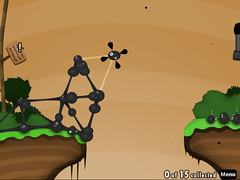
While getting reaquainted with my Wii, I also saw that I had some spare Wii points available. After poking around the WiiWare selection, I decided to finally give World of Goo a try. Michael Abbott's posts in October really piqued my interest and convinced me to get the Wii version. The first time I played it was when my sister and brother in law were over visiting. I was once again stunned at how amazing and purely FUN the game was. I love the music and desperately wish there was a soundtrack available. The art is unique to any game I've played before and solving the puzzles is incredibly satisfying to me.

Since my sister was over, we brought out the extra controller and played cooperatively together, with her husband providing backup. Playing local co-op in games isn't something I'm used to. Since I didn't grow up with consoles, I'm used to either playing by myself or hopping online to play something cooperatively. Playing together with my sister, working out the puzzles together, grabbing a goo ball when the other drops it, and arguing over the best course of action has made the game far more fun than it ever would have been if I had just tried it myself. Some of the more difficult puzzles were made much more bearable by the presence of another person to share the frustration. It's a new experience for me. Even when playing Rock Band with friends and family, I didn't feel the same sense of shared enthusiasm for doing well together. After they left I played a few more levels by myself, but it just wasn't the same. Now I only play when they're over. For me, it's simply the way the game is supposed to be played.

These games have been great palate cleansers after the flood of high profile games. They've reminded me that I still primarily play games for fun and brought the joy of picking up the controller back. The added baggage of deep, complicated stories, hyper-competitive multiplayer, and furthering the graphics race has been stripped away to a simple set of rules that are used in a multitude of unique and creative ways. It's nice to get back to basics.

Sunday, December 7, 2008

Should Games Have Content Filters?


I never got around to posting it here, but I got a position writing at Hardcore Christian Gamer, aka HCG. It's a volunteer thing, of course. It's Yet Another Games site, of which there are hundreds or thousands on the Internet, so it's not like anyone is getting paid to write for them. The community is growing though, and I enjoy doing it during my free time at work. It gives me a way to work on my writing skills and learn how to write for a specific audience. I write the occasional review, and post news up throughout the day.

My evangelical Christian days are behind me, for the most part, but I'm still sympathetic, I suppose. The range of beliefs among the community is pretty wide, and some of the discussions on Christianity get pretty heated. One topic that comes up fairly often is whether or not a particular game has language and gore filters on it. The Gears of War games have these filters in them. Gore is changed to bright sparks. The language filter apparently only blanks out the f-bomb, which disappoints many in the HCG forums. I've heard that Call of Duty: World at War also has some sort of filter. Some won't even play games like Guitar Hero or Rock Band because of some of the lyrical content in the songs. Others can tolerate most bad language, but get upset when a character takes the Lord's name in vain.

My first reaction to questions about filters in these games was, "Isn't the gore and language part of the point of these games?" Taking them out leads to an experience as watered down as an R rated movie shown on network TV, or a vulgar rock song played over the radio. The tune is there, and so are most of the lyrics, but it loses its impact.

This of course brings up other questions like, should there even be such a thing as "bad" words? Or, why is the violence okay but the language not? I occasionally see someone start a thread on other forums asking about content filters in games, and the responses are usually something like, "Go play crappy movie games if you don't like language." People looking for the fun of a certain game without the more questionable content are generally dismissed without a second thought.

I think, however, that if we ignore those questions and take the desire for tamer content at face value, it brings up some interesting issues. The gameplay and story are almost always mutually exclusive in your typical triple-A game. The parkouring gameplay of Mirror's Edge could as easily have been featured in some kind of extreme sports game instead of the dystopian future it actually contained. The cover based, psuedo-platforming, shooting gameplay Gears of War could easily have been set in some sort of benign lasertag game. The underlying gameplay, and whether it's fun or not, is what keeps people playing. The gritty settings and characters of Gears of War are just an aesthetic choice by the developers.

Since videogames, in my mind, are more deliberately constructed than a song or a movie, I think they are more able to feature customized content. Like Gears of War, a game can be programmed to show either sprays of blood or sprays of bright sparks. A more text based game can feature alternate passages of text that don't feature the profanity that offends some people. It presents more of a problem for a game featuring full voice acting since it would be expensive to record to versions of dialogue for a significant portion of the script, but it's still doable. A movie on TV may feature jarring blanks in dialogue or, even worse, bad overdubs to add in a more "appropriate" word. A game just has to have a bit of code to swap in a particular piece of content depending on what the user chose. The RTS Company of Heroes apparently is an extremely fun game (I haven't played it myself) and can even be used to teach about WWII, but the language and gore in the game makes it something you may not want to expose your fifth grader to. The ability to turn that content off wouldn't take away from the gameplay or setting.

If these sorts of things can be added in, then a developer has broadened the audience for its game just that little bit more. It's impossible to please everyone, of course (Just the other day on the HCG forums, a mother was fretting over the presence of cheerleaders in the DS version of Madden 2009. Yes, the DS version.), but I don't think there's a good reason to simply ignore the sizeable population of people who would appreciate that sort of feature.

Incidentally, I also wish that some games were more liberal about the content they allowed. I've often wished that Harmonix would release a version of Rock Band that didn't censor the lyrics of the songs. Alanis Morrisette's You Outta Know loses some of its punch when the line is changed to "...and are you thinking of me when youuuuuuuuuuuuuuuuuuuuuuuher?" Let people have a choice, either way.

Thoughts?

Wednesday, November 5, 2008

Oh Microsoft...

Last night, flush with the pride of performing my civic duty, yet tired from a typically uninspiring day of work, I sat down to lose myself in a few hours of Fallout 3. I loaded my save game file, made sure I was sneak mode, then began creeping forward.

Then something catastrophic happened.

The HUD was still displayed, but behind it was a distressing checkerboard pattern. The ambient sounds from the game seemed to be caught in a loop. The game itself was frozen. The guide refused to appear.

Perturbed, I got up, turned off the Xbox, then turned it back on. I was met with three flashing red lights surrounding the power button. My stomach dropped as I powered it off and on again. Still flashing red. I sighed, looked around the room for some unknown sign of hope or encouragement, then tried it once more. Ah hah! The boot-up animation is star... Oh wait, it's frozen again with that charming checkerboard pattern overlaying it. Hopes fading, I rebooted and once more gazed upon the infamous Red Ring of Death.

I've had this Elite for just over a year. It was my second 360. after my Premium model from 2005 stopped outputting video. Since it hadn't given me the RROD, and was therefore out of the original warrany, I decided to simply upgrade to a new Elite that was hopefully more reliable. I also bought Best Buy's 2 year replacement plan. It came in handy last night.

I packed everything up and drove to Best Buy. I was sadly bemused to see a teenager and his older relative in front of me in line also exchanging their broken 360 for a new one. While waiting for the Best Buy employees to process our returns, the teenager and I chatted and commiserated about our mutual console woes. Apparently his stopped working after he put in his friend's hard drive. That seems like an odd problem to have, honestly. Maybe he tried doing this while the console was on? I didn't think to ask him about it.

Anyway, the exchange went smoothly, though I did purchase a new replacement plan. It was certainly money well spent the last time. The new one is significantly quieter, which is nice. Also, the new one came bundled with Lego Indiana Jones and the game of Kung-Fu Panda. They were supposed to remove them but forgot. Bonus for me.

Tuesday, October 14, 2008

Ode to Mass Effect

Spoilers ahoy. Watch yourself.

Last year, one of my most anticipated titles coming out that holiday season was BioWare's epic space opera RPG, Mass Effect. I was looking forward to a space-based RPG as opposed to your typical swords and elves fantasy setting. I had recently finished their last RPG, Jade Empire, and enjoyed it immensely. Mass Effect's universe looked interesting, I love a good western RPG, so basically it looked like everything I could want.

I preordered the collector's edtion, and it was with great excitement that I fired up the game for the first time. The graphics were excellent and I loved the old-school synthesized style of the music.

And yet...

I started noticing issues. The game wasn't doing much to show me how to play. I had no idea until much later that you could add upgrades to weapons and armor. The combat in general was a bit bland. The Mako vehicle was extremely frustrating to drive. The optional planets were boring and lifeless, they contained the same three buildings ALL OVER THE GALAXY. When loading scenes and areas it sometimes took several seconds for the textures to finish streaming, making the game look like it belonged more on the N64 than the Xbox 360. Most of the time, the characters talking have no expression and fall squarely within the Uncanny Valley.

The main quest was the most compelling part. Tracking down Saren and unraveling the mystery of the Reavers and Protheans was exciting, and the story kept me wondering what was going to happen next. The final space battle against the Reaver ship amidst the Citadel was truly epic, and ranks as one of the few endings to a game that actually lived up to and exceeded everything that came before it.

I completed the game, happy, though slightly disappointed that the many issues detracted from what could have been a masterpiece.

And yet...

I am in the midst of my 5th playthrough, with my third character. The first 3 were with the same character, a female, leveled up to the max and trying the different good/evil conversation options and using a combination of biotic powers and short range weapons. The 4th was with a male soldier decked out with heavy weaponry. My current character is a female engineer, master of technological attacks.

Playing as a soldier is pretty boring. Doing so makes the combat into a substandard shooter. It's when you start using biotic or tech powers that the game gets interesting. Lifting an enemy into the air, then throwing him across the room, or better yet, off a cliff, never gets old. Hacking an enemy geth so he turns around and begins firing rockets at his friends is great fun.

More than anything, though, the universe and people inhabiting it continue to draw me in. BioWare went to a LOT of effort to flesh out the history and motivations of the various races, and of many of the characters you come across. It feels like a real world, with real people.

My favorite parts of the game are on the Citadel in the beginning and on the first part of Noveria, one of the main quest planets. The Citadel is scattered with quests. They're quick, but bring up a variety of situations for you to resolve. They often require a high conversation skill to get the best or most interesting resolution to the quest. Noveria, though, really showcases BioWare's writing ability and questmaking skills.

Noveria is a world controlled by amoral corporations doing research across the planet. The side quests are made so that it's very tempting to choose the mercenary, look-out-only-for-myself path. If you do your utmost to stay on the straight and narrow, there might not be any benefit whatsoever. No experience points, no money, nothing. Being evil, on the other hand, makes it possible to backstab and betray nearly everyone you come across. Agree to smuggle illegal weapons into the port for a merchant, then sell it directly to his customer. Agree to place a computer virus on a businessman, inform the businessman of the plot against him, then tell your contact you planted the virus AND demand more money. In 5 playthroughs, I'm still encountering new outcomes to these quests.

In addition to things like that, the companions you have with you can change how some conversations play out. The order you choose to do quests can change other quests. The back story you choose for you character changes some quests and adds completely new ones.

Basically, if you only play the game once, you're missing out on a fairly large amount of the content BioWare created.

So I suppose that explains why I keep coming back to the game. I still feel like I haven't really described some of the undefinable appeal this game has for me, but I think I got the gist across. Even with the flaws listed above, I truly love this game. It sweeps me away to another world, and it's a world I can lose myself in.

The Pile of Shame

I probably beat more of my games than the average person, but like everyone, there are games I own that I either haven't finished, or haven't even started. Without further ado, here is my list:

PS2
Final Fantasy X - I'm at the final boss fight, and can't beat him. I don't want to spend hours doing the necessary tasks to get the ultimate weapons, and all my characters are extremely high level. I just want to see how the game ends. I really loved this game until the point I'm at.

Final Fantasy XII - I would like to beat X before I start this one

Killer7 - Just havent gotten around to it

Gamecube
The Legend of Zelda: The Wind Waker - I got stuck at the water temple. I really really liked the game. The art was fantastic, and it was my first Zelda game. The combat was a little clunky with the Gamecube controller, but everything about the game is great.

Resident Evil 4 - I know this is in people's top 10 game lists, but I HATED the controls. I also didn't like the fact that the zombies endlessly spawn

Wii
Super Mario Galaxy - I really like this game, but for whatever reason I don't really think about it much. It's just neglected and forgotten.

Xbox
Star Wars Knights of the Old Republic - Excellent excellent game, but I was playing it on the 360 and the software emulation introduces a lot of sound popping and other problems. It made the game unplayable for me. I should start it again on the PC.

Xbox 360
Overlord - I really liked the demo, but for some reason had a hard time getting into the whole game. Basically I just got bored with it.

Hitman: Blood Money - I got this off Ebay for cheap. Played the intro level, and thought it was ok. Got stuck in the first mission and never went back. I doubt I'll ever finish this.

Viva Pinata - A very good game that nonetheless feels like too much work. I'm not a big fan of micromanagement in games and that's all this game is.

PC
STALKER: Shadow of Chernobyl - This game is a little too hardcore for me. Very realistic weapon behavior, very difficult enemies, it's just very unforgiving. I liked the atmosphere, but it wasn't much fun to play.

Fallout/Fallout 2 - No excuse, really. I've started Fallout a couple times but haven't got far. There's not really time to play them before Fallout 3 comes out either.

Diablo/Diablo 2 - I've started Diablo several times and, like Fallout, haven't gotten far in that one either. It just doesn't suck me in for whatever reason. I have a feeling I'll like Diablo 2 better but I'd like to finish the first one.


I'm probably forgetting some, but those are the biggest offenders at the moment.

Monday, September 8, 2008

How Much Game You Want?

A few weeks ago, Shacknews.com was looking for more writers. I threw my hat in the ring and submitted a few things. It appears that they didn't take me up on the offer, so I'll go ahead and post what I submitted.

---

How much game do we want in our games? How many hours of entertainment do we expect to get before we say that, yes, our money was well spent? Twenty hours? Forty? 100?

A frequent lament of gamers this generation is that games are becoming shorter. They yearn for the days of shooters with thirty hours of gameplay, and 100 hour epic RPGs. However, developers often claim that relatively few players actually get to the end of their games. Whether it’s because of uneven difficulty, boredom, or simply a lack of time, most people will never see the end of the adventure they’ve spent so many hours on. With this fact in mind, and the skyrocketing cost of producing triple A games, should developers continue making games that take weeks to complete?

There are a few ways developers extend the length of time we play their games. The most obvious way is adding a multiplayer component. For many gamers, multiplayer is the primary reason they buy a game. There are people who haven’t touched the single player campaigns in Halo 3 or Call of Duty 4. When the gameplay comes together just right, there are possibly hundreds of hours of enjoyment to be had in shooting strangers over the Internet.

Not everyone enjoys traditional multiplayer gaming, though. For some, the joy comes from experiencing a well done story. Developers make a choice on how long to make this story or campaign, but some have added ways to extend that experience through replayability. For some games, it’s nothing more than having multiple difficulty levels. Some games add optional collectibles to find. Collectibles add an incentive for exploring the game world thoroughly, and the best ones have a direct impact on the gameplay. Assassin’s Creed’s flags had no impact on the gameplay, but it did give the player an excuse to see parts of its cities that the story itself doesn’t take you to. Occasionally, these led to some beautiful vistas in the cities and kingdom. Crackdown’s collectibles were more satisfying, as finding the agility and hidden orbs improved your character’s stats.

Others add cooperative play to the mix. Playing with friends can make the most mediocre game more enjoyable. Throw in something like Halo 3’s skulls and campaign scoring, and you have multiple kinds of experiences to be had in the same story.

Let’s talk about the length of the story though. Whether playing alone or with friends, the length of a campaign, and whether or not it’s long enough, is a highly subjective but critical aspect of feeling as if you’re getting your money’s worth from a game. For me, the hours spent playing a game don’t matter to me as much as the feeling that they were hours well spent. Having just recently completed Okami, I can say that it was a great game. My main problem with it is that it’s so obviously padded for length that several times I contemplated giving up on it. Why did I have to fight many of the bosses twice? Why did I have fight one of them three times? It didn’t further the plot at all.

Some of my favorite games of the past few years have been relatively short affairs. Portal is the obvious example. Short, sweet, and as close to a perfect game as any I’ve yet played. I would have paid $60 for it. Call of Duty 4 has a fairly short campaign that could probably be beaten in one six hour sitting. Yet, it packed a more dense variety of locations, settings, and types of gameplay than many 40 hour “epics.” Half-Life 2: Episode One fixed my primary beef with its predecessor, Half-Life 2. For me, Half-Life 2 offered plenty of variety, but for the first two-thirds of the game it felt like each segment overstayed its welcome by an hour or more. On the other hand, once I hit Nova Prospekt, the game goes into overdrive for me and I don’t want to stop playing until I reach the end. Episode One, though, offered a dense variety of situations that lasted just long enough for me to feel satisfied, and so far it’s my favorite entry in the series.

As games and the consoles that play them get more expensive, this will become more of an issue. Right now, we’re seeing a lot of experimentation as far as pricing for downloadable titles on consoles. Five and ten bucks used to be the norm, but now we’re seeing fifteen and twenty dollar titles. Every gamer has a different idea of what a downloadable title is worth, so you get arguments over whether or not Braid is worth 1200 MS points. There’s the sense that XBLA, WiiWare, and PSN games aren’t “real” games because they’re so short. It makes more sense to me to judge a game’s worth on the overall experience though, not its length. Again, that’s a highly subjective thing to say, so I wouldn’t presume to force that viewpoint on other gamers. However, it may become a more common viewpoint out of necessity as the trend towards shorter games continues.

Wednesday, August 20, 2008

Your Love is Like Bad Medicine Company

I won Battlefield: Bad Company in a raffle. It's not something I would have bought on my own, but I had my pick of any game. This seemed like it would be a nice diversion for a week or so.

Having never played a Battlefield game, I wasn't too sure what to expect. This is the first game in the franchise with a true single player campaign, so as always, I was more interested in playing that than the multiplayer. Things have taken a surprising turn, however.

I started the game on Normal difficulty and immediately began giggling at the dialogue among the characters. The banter between the Sarge (squad leader), Sweetwater (soft spoken yet talkative techy), and Haggard (loudmouthed and talkative explosives expert) is highly entertaining. You play as Preston Marlowe, a bland and quiet new recruit to B Company. While my playable character didn't excite me, the rest of the characters gave me high hopes for the rest of the game.

Unfortunately, as soon as I actually started playing I started to have misgivings. The enemies blend into the scenery a little too well. This may be realistic, I dunno, but I became very frustrated when I was being shot at and couldn't find the person shooting at me. I ended up having to stand still and look for muzzle flashes, all while continually losing health. Thankfully, you can restore your health at pretty much any time, and while you do respawn when you die, any enemies you've killed are still dead. The shooting itself didn't really excite me either. So far, none of the weapons have had any real oomph to them. Perhaps later weapons will feel more deadly as I find them.

I jumped into the multiplayer with some friends to try it out, and at first it was as unfulfilling as nearly every other multiplayer shooter I've tried. As we all know, human opponents in a game are the bane of my existance, and I find the mindless killing of deathmatch to be boring. However, once I tried the sniper and demolition classes, something clicked. Much like the two Ghost Recon games on the 360, there is some undefinable quality about the game that makes me enjoy playing, even when I'm dying over and over. Playing as a run and gun class was typically frustrating, but being about to sit still and snipe, or sit still and fire rockets at vehicles, was much more fun. Maybe I should stick to that for all my multiplayer gaming.

I'll keep hacking away at the single player unless I get totally bored with it. However, if you're lucky, you may actually get the unique pleasure of playing a multiplayer game with me. Assuming you have the game, of course.

Wednesday, August 13, 2008

It Is Finished

Finally beat Okami. I may or may not have more thoughts on it later. For now, I'm going to bed.
 
Copyright © Alethiometry | Theme by BloggerThemes & frostpress | Sponsored by BB Blogging